Losing a front tooth can send shivers down your spine. But what if there was a way to replace a missing tooth using your own wisdom tooth? That’s the power of wisdom tooth autotransplantation, a procedure gaining traction in dental surgery.
A very interesting case study published in Cureus, titled Wisdom Tooth Autotransplantation for the Missing Maxillary Central Incisors Using a 3D-Printed Replica: A Case Report written by Haneda Y, Murayama T, Nikawa H, et al. (May 29, 2024, vol. 16, no. 5) describes how a 19-year-old man received a wisdom tooth transplant to replace his two missing front teeth.
Traditional Solutions and a Patient’s Preference
When a tooth goes missing, especially a prominent front tooth, replacing it becomes a priority. Traditional options include dental implants and fixed partial dentures. Implants are artificial tooth roots surgically placed in the jawbone, topped with a custom-made crown. Fixed partial dentures bridge the gap between missing teeth using crowns attached to neighboring teeth.
While both methods are effective, the patient in the study preferred a different approach. He desired a natural-looking replacement using his own teeth. This is where wisdom tooth autotransplantation comes in.
Wisdom Tooth Autotransplantation: A Second Chance for Wisdom Teeth
Wisdom teeth are the last teeth to erupt. They frequently get impacted, requiring extraction. But what if these extracted teeth could be given a new lease on life?
Wisdom tooth autotransplantation involves transplanting a healthy wisdom tooth from its original location in the jaw to the site of the missing tooth. This technique offers several advantages:
- Natural Appearance: The transplanted tooth maintains its natural look and function, mimicking the surrounding teeth.
- Biocompatibility: Since it’s your own tooth, there’s no risk of rejection by the body.
- Bone Preservation: Transplanting a tooth helps preserve jawbone health, which can deteriorate with traditional methods like dentures.
The Power of 3D Printing in Surgical Precision
The success of this case study hinged on meticulous planning and advanced technology. Doctors used a 3D-printed replica of the patient’s wisdom tooth to visualize the exact positioning and ensure a perfect fit in the upper jaw where the front teeth were missing. This 3D model helped create a surgical guide, ensuring a smooth and precise procedure.
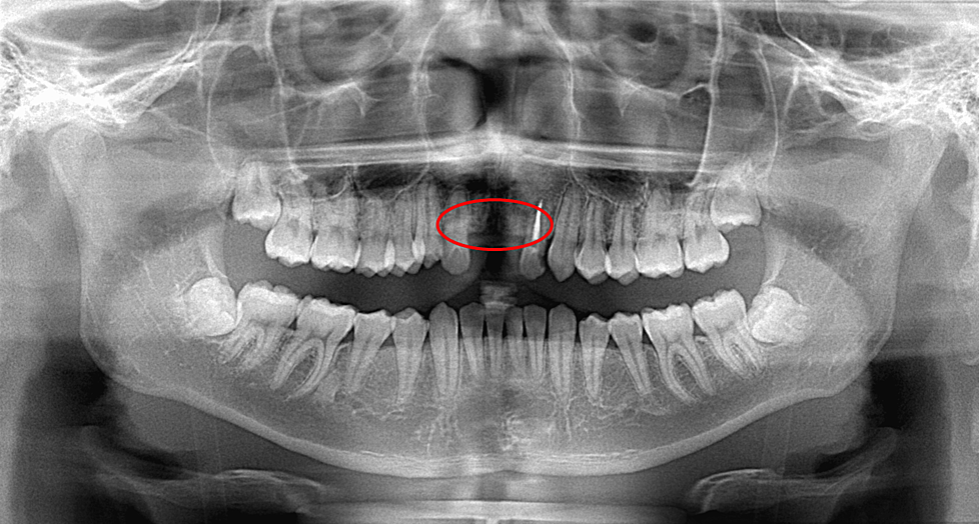
From Haneda Y, Murayama T, Nikawa H, et al., Wisdom Tooth Autotransplantation for the Missing Maxillary Central Incisors Using a 3D-Printed Replica: A Case Report, Cureus, May 29, 2024, vol. 16, no. 5.
The Surgery and the Road to Recovery
The wisdom tooth autotransplantation involved extracting the patient’s lower right wisdom tooth and transplanting it into the upper jawbone. After the surgery, the transplanted tooth was stabilized with splinting, and orthodontic treatment was implemented to adjust its position and alignment with the surrounding teeth.
The case study reports a successful outcome. Four years after the transplant, the transplanted wisdom tooth remained functional and stable, offering the patient both aesthetic and functional benefits.
Wisdom Tooth Autotransplantation: Not for Everyone
While this case study showcases the potential of wisdom tooth autotransplantation, it’s important to understand that it might not be suitable for everyone. Factors like the health of the wisdom tooth, the condition of the jawbone, and the severity of the missing tooth case all influence candidacy for this procedure.
The Future of Wisdom Teeth: Beyond Extractions
Wisdom tooth autotransplantation presents a promising alternative for replacing missing teeth, particularly front teeth. This innovative technique offers patients a natural, biocompatible solution with the potential for long-term success. As dental technology continues to evolve, we might see wisdom teeth playing a more significant role in restorative dentistry.