Traditionally, dentists rely on panoramic X-rays to assess wisdom teeth before extraction. But these 2D images can be misleading, sometimes leading to unexpected surgical challenges.
A recent study explores the potential of using artificial intelligence (AI) to improve the accuracy of predicting wisdom tooth extraction difficulty.
The Study’s Findings
The study showed that X-ray limitations are confirmed. Relying solely on X-rays for predicting surgical complexity can be inaccurate, even for experienced dentists. The study showed that AI shows promise. Deep learning models, a type of AI, analyzed panoramic X-rays and showed promise in identifying features that might be missed by the human eye. These models could predict the need for additional procedures like tooth separation or bone removal with high accuracy.
The study also compared the accuracy of AI models with dentists in predicting the need for crown or root separation during surgery. AI models performed better than dentists in this specific task. However, the overall accuracy for predicting extraction difficulty using X-rays remained moderate for both AI and dentists. This suggests that X-rays may have limitations in capturing all the factors that influence surgical complexity. The study acknowledges that more advanced imaging techniques like cone-beam CT scans might be necessary for more precise assessments.
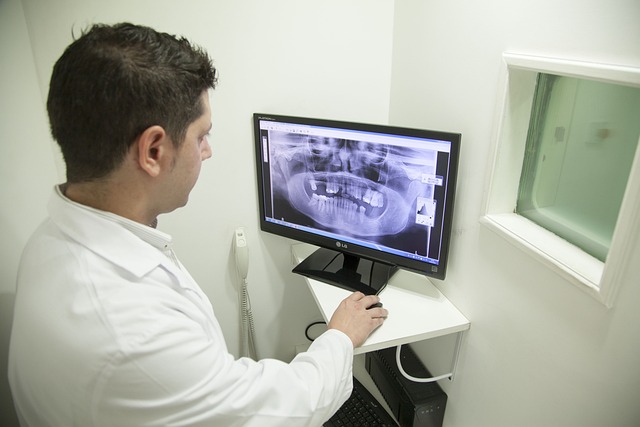
If further refined, these type of AI models could help dentists better prepare for surgery by predicting complexity, improve patient counseling by providing more accurate information about potential risks and complications, optimize resource allocation in hospitals and clinics. The authors state
“We anticipate that integrating three-dimensional image data, such as CBCT [cone beam computed tomography], in the future could further improve the performance of DL [deep learning] models, contributing to advancements in diagnosing the difficulty of mandibular wisdom teeth extractions.”
The Future of AI in Dentistry:
This study highlights the potential of AI to revolutionize oral surgery. As AI models continue to evolve, they may become an invaluable tool for dentists, improving patient care and surgical outcomes.
Overall, the study suggests that AI has promise as a tool to assist dentists in wisdom tooth extraction procedures. While AI may not replace X-rays entirely, it could be a valuable addition to the dentist’s toolbox for improving patient care.
Source:
Atsushi Danjo and et. al, Limitations of panoramic radiographs in predicting mandibular wisdom tooth extraction and the potential of deep learning models to overcome them, Scientific Reports, volume 14, Article number: 30806, 2024.