Most people think of gum disease as a dental problem that leads to bleeding gums, bad breath, bone loss, or even tooth loss. But new research (Sheetal Parida, Deeptashree Nandi, Deepak Verma, Mingyang Yi, Ashutosh Yende, Jessica Queen, Kathleen L. Gabrielson, Cynthia L. Sears, Dipali Sharma. A pro-carcinogenic oral microbe internalized by breast cancer cells promotes mammary tumorigenesis. Cell Communication and Signaling, 2026) suggests that oral bacteria linked to gum disease may also play a role in breast cancer growth and spread. That makes this more than just a dentistry issue. It is another reminder that oral health and overall health are closely connected.
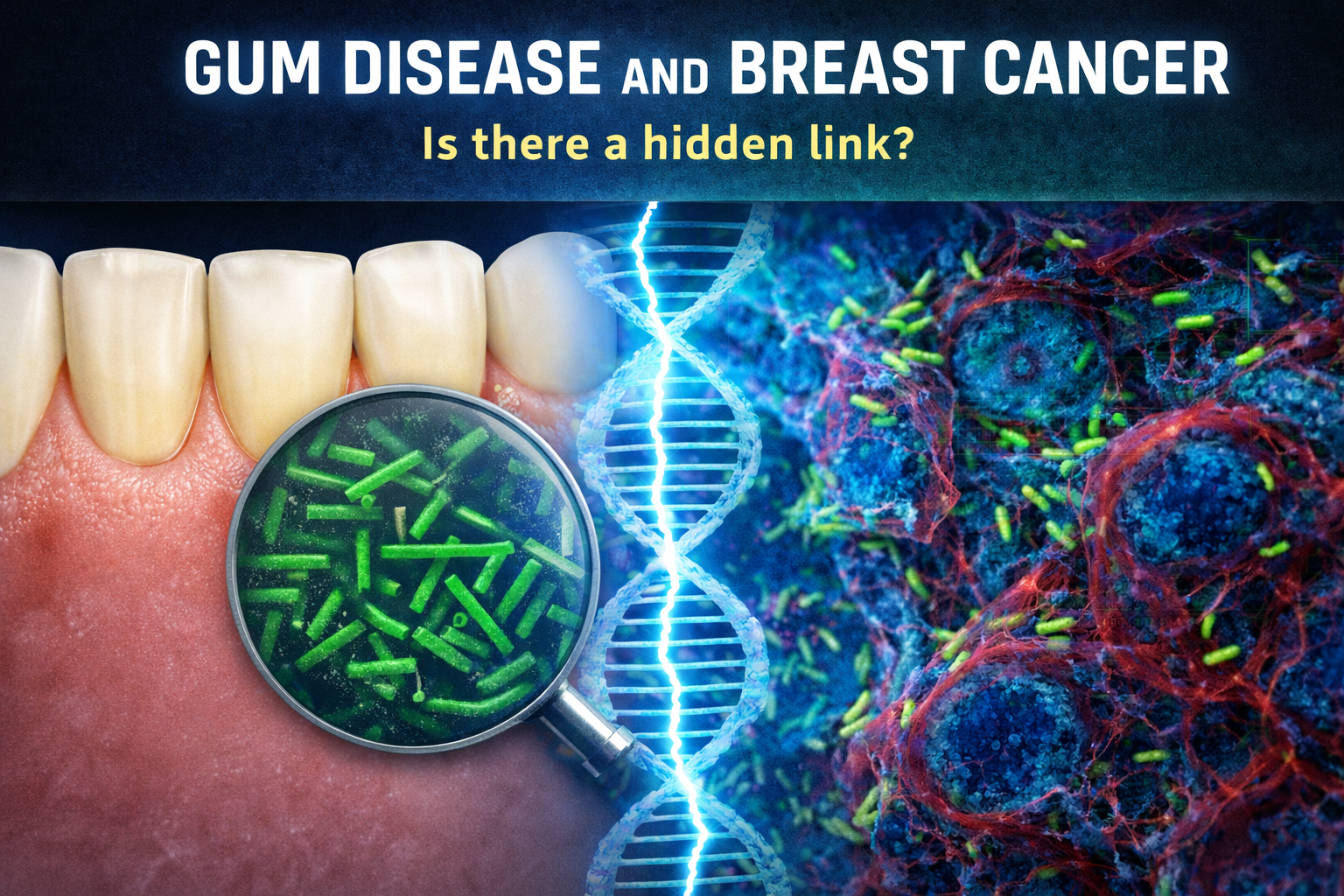
The bacterium highlighted in the research is Fusobacterium nucleatum, a microbe commonly associated with periodontal disease. Researchers found that it may travel from the mouth into the bloodstream and reach breast tissue, where it can contribute to inflammation, DNA damage, and tumor-promoting changes. In models of breast cancer, it was linked to faster tumor growth and increased spread to the lungs.
Why This Matters for Oral Health
For dentists, this research supports a message patients often underestimate: healthy gums matter. Gum disease is not only about what happens in the mouth. Chronic oral infection and inflammation may have effects throughout the body.
This is especially important for patients who delay dental care, ignore bleeding gums, or put off treatment for infected areas. Wisdom teeth, especially partially erupted or hard-to-clean wisdom teeth, can create spaces where bacteria collect more easily. The same is true for deep gum pockets, inflamed gums, and areas of ongoing periodontal infection. While the study was not specifically about wisdom teeth, it reinforces the idea that long-term bacterial buildup in the mouth should not be ignored.
What the Research Found
According to the study summary, Fusobacterium nucleatum was able to settle in breast tissue and trigger harmful biological changes. These included DNA damage, inflammation, increased cell growth, and more aggressive cancer behavior. The bacterium also appeared to make cancer cells more resistant to therapy.
The effects were even stronger in cells with BRCA1 mutations, suggesting that oral bacteria may work together with inherited risk factors in some patients. That does not mean gum disease directly causes breast cancer, but it does suggest that oral bacteria may be one piece of a larger risk picture.
The Dental Takeaway
For dental patients, the message is simple: do not ignore gum disease. Bleeding gums, chronic inflammation, or infection around wisdom teeth are not small issues to put off. Routine dental cleanings, good brushing and flossing habits, and timely treatment of periodontal disease may matter for more than just protecting your teeth.
Final Thoughts
This research adds to growing evidence that the mouth can affect the rest of the body in important ways. Gum disease bacteria may do more than damage gums and bone. They may also contribute to disease processes far beyond oral health. That is why taking care of your gums, treating infection early, and staying on top of dental visits may be one more way to support long-term health.