
Imagine waking up from a routine dental surgery only to realize you can’t feel your lip, or worse, that your tongue feels like it’s constantly burning. For most, a trip to the dentist is a minor chore. But for a small number of patients, trigeminal nerve damage can turn a simple procedure into a life-altering injury.
At the University of Sheffield’s School of Clinical Dentistry, researchers are using a mix of neuroscience, material science, and 3D printing to give these patients their lives back.
The Hidden Impact of Nerve Injury
The trigeminal nerve is the “highway” for sensation between your brain and your face. When it’s damaged, the symptoms are often invisible but devastating:
- Physical: Numbness, tingling, or “stabbing” pains that make eating and speaking difficult.
- Emotional: Because the injury affects the face—the part of ourselves we show the world—patients often suffer from anxiety, depression, and social isolation.
Until recently, patients had very few options. Surgical outcomes were often poor, leaving many with permanent injuries.
From “Bench to Bedside”: A New Approach
A multidisciplinary team at Sheffield, including Dr. Simon Atkins, Professor Fiona Boissonade, and Dr. Emma Bird, decided to change the status quo.
By removing damaged tissue and precisely stitching nerve endings back together, they found they could significantly improve recovery. However, a major problem remained: What happens when the gap between the nerve endings is too large to bridge?
Enter 3D Printing
To solve the problem of large nerve gaps, the team partnered with engineers to create something revolutionary. Using 3D printing and biocompatible materials, they have developed:
- Nerve Guides: A 3D-printed tubular structure that acts as a bridge between the two severed ends of a nerve.
- Growth Enhancement: The precision of 3D printing allows researchers to add internal features to these tubes that “guide” and speed up the growth of new nerve fibers.
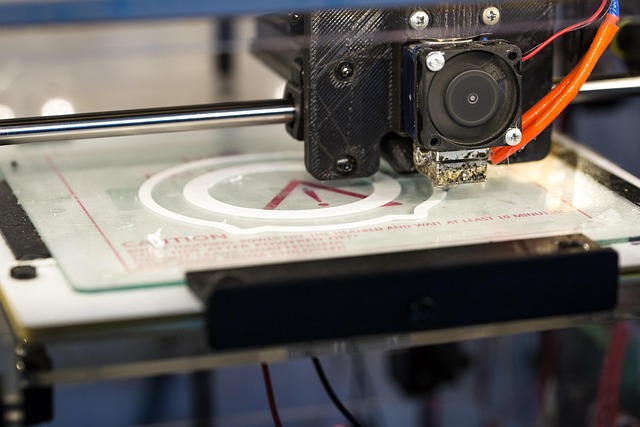
Image by Lutz Peter from Pixabay
Solving the Mystery of Pain
Why do some patients feel total numbness while others feel excruciating pain? To answer this, the team is utilizing a unique library of human tissue.
Every sample of injured nerve removed during surgery is linked to a patient’s specific pain history. By studying these molecules, researchers are working to develop targeted treatments that can shut down “stabbing” sensations without affecting other functions.
“The idea is to generate potential new treatments to reduce pain in those who experience it.” — Professor Fiona Boissonade
A National Center for Healing
This research isn’t just happening in a lab—it’s helping people right now. Sheffield has established a national tertiary referral center, the only one of its kind in the UK.
After 20 years of dedication, the results are clear: patients are seeing highly significant improvements in sensation and a massive reduction in chronic pain.
Why This Matters
This work is a perfect example of interdisciplinary research. By bringing together surgeons, neuroscientists, and engineers, the University of Sheffield is turning “science fiction” solutions like 3D-printed body parts into a standard of care that restores quality of life.