
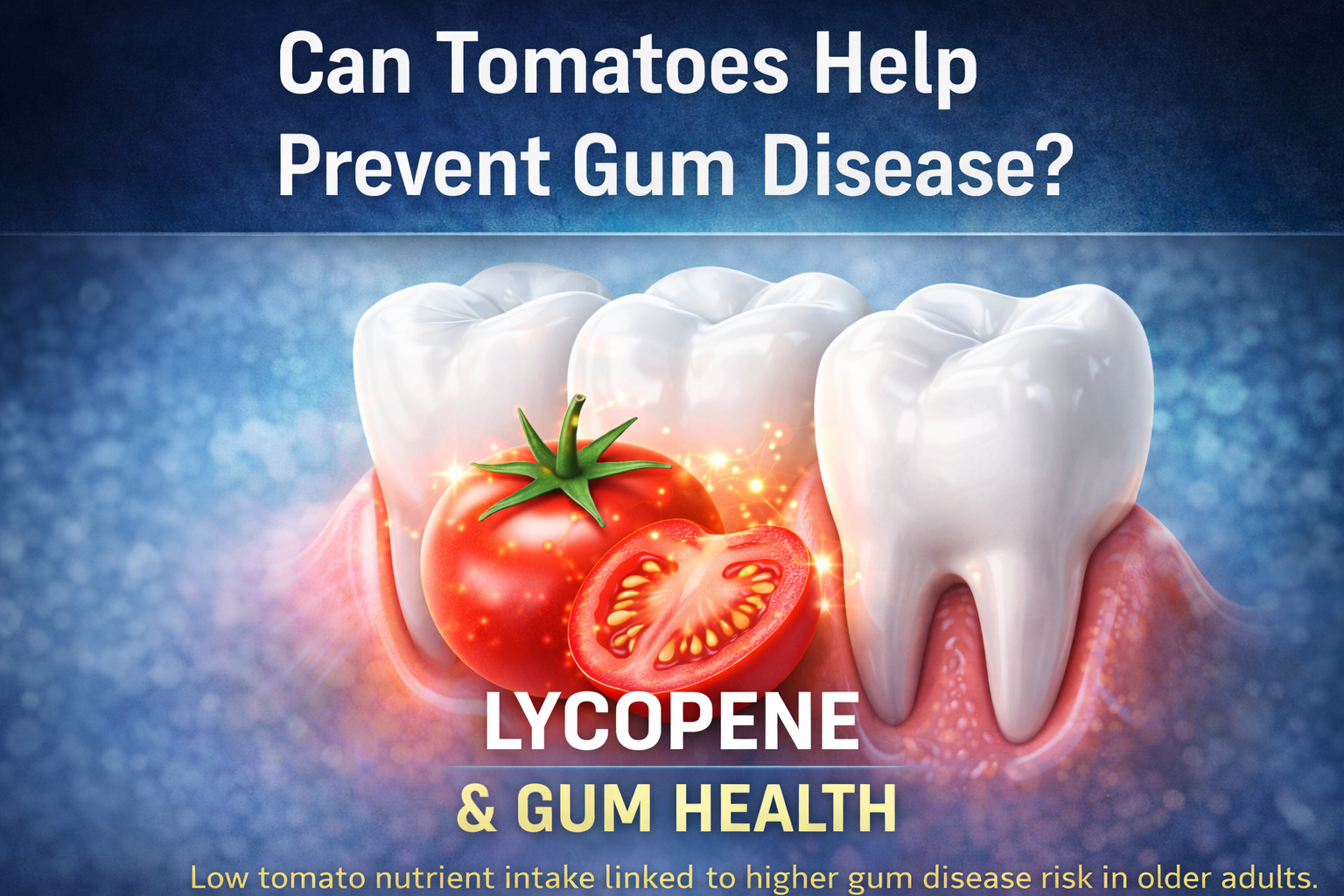
When people think about preventing gum disease, they usually focus on brushing, flossing, and regular dental cleanings. Those are still the foundation of good oral health. But new research (Katherine Kwong, You Lu, ZhuoHuan Li, Susu Luo, Zhaoyu Huang, Zhong Chen, Na Zhao, Tung-Sung Tseng. Lycopene, Race and Periodontitis: Disparities in Older Adults. The Journal of nutrition, health and aging, 2026; 30 (2)) suggests that lycopene, the antioxidant that gives tomatoes their red color, may also be linked to a lower risk of severe periodontitis in older adults.
That matters because periodontal disease is one of the biggest threats to long-term oral health. Severe gum disease can lead to gum recession, bone loss, loose teeth, and eventually tooth loss. It can also make it harder to maintain areas that already trap bacteria, including around crowns, bridges, implants, and partially erupted wisdom teeth.
In the study, researchers looked at adults ages 65 to 79 and found two notable patterns. First, nearly half had periodontitis. Second, more than three quarters were not getting enough lycopene in their diets. Older adults with adequate lycopene intake had about one-third the odds of severe periodontitis compared with those whose intake was too low.
Why Lycopene Matters for Gum Health
Lycopene is a carotenoid found mainly in tomatoes and other red fruits. Researchers believe antioxidants like lycopene may help by reducing oxidative stress and supporting the body’s response to inflammation. Since gum disease is driven by bacteria and inflammation, diet may play a bigger role in gum health than many people realize.
This does not mean tomatoes can replace brushing, flossing, or periodontal treatment. But it does suggest that nutrition may be one more factor that helps protect the gums, especially in older adults who are already at higher risk.
A Dental and Wisdom Teeth Angle
From a dental perspective, this is especially relevant for patients with areas that are harder to keep clean. Wisdom teeth, particularly when partially erupted, can create pockets where plaque and bacteria build up more easily. The same is true for deep gum pockets and crowded back teeth. When oral hygiene is more challenging, reducing inflammation becomes even more important.
That is why dentists often talk about oral health as more than just brushing technique. It is also about the overall environment in the mouth, including diet, bacterial load, and inflammation control.
What Else the Study Found
The study also found differences by sex and race. Severe periodontitis was more common in men and in non-Hispanic Black adults. Women had lower odds of severe disease than men. Among non-Hispanic White adults, adequate lycopene intake was linked to lower risk, while the same pattern was not observed in non-Hispanic Black adults. That suggests gum disease risk is shaped by multiple factors, not diet alone.
The Takeaway
This research does not prove that low lycopene directly causes gum disease. It shows an association, not direct causation. But it does add to the growing idea that nutrition and oral health are closely connected.
The practical message is simple: if you want healthier gums, think beyond the toothbrush. Regular dental care, strong home hygiene, attention to problem areas like wisdom teeth, and a diet that includes nutrient-rich foods such as tomatoes may all help support better gum health over time.