
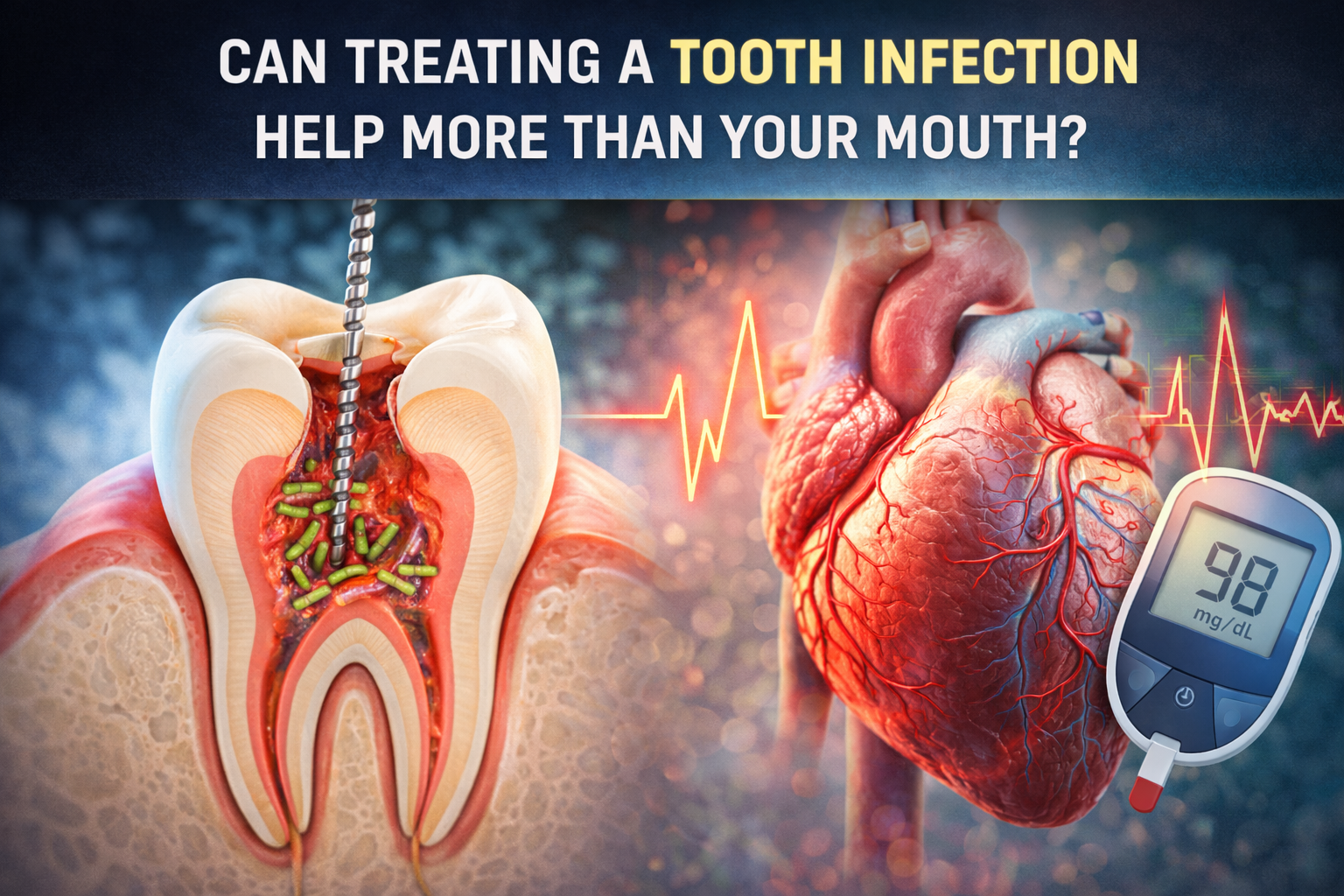
Most people think of a root canal as a way to save a painful or infected tooth. But emerging research suggests that treating a dental infection may do more than protect your smile. It may also help reduce inflammation and improve markers linked to blood sugar and heart health.
That matters because infections in the mouth do not always stay in the mouth. When a tooth infection develops deep inside the tooth and around the root, bacteria can enter the bloodstream and trigger inflammation elsewhere in the body. Researchers found that after successful root canal treatment, patients showed improvements over time in glucose metabolism, cholesterol-related markers, and inflammation levels (Yuchen Zhang, Adrien Le Guennec, Pirkko Pussinen, Gordon Proctor, Sadia Ambreen Niazi. Successful endodontic treatment improves glucose and lipid metabolism: a longitudinal metabolomic study. Journal of Translational Medicine, 2025; 23 (1)).
Why Oral Infections Matter
A dental infection such as apical periodontitis can develop when bacteria reach the inner part of the tooth. If left untreated, the infection may continue to spread around the root and beyond the tooth itself. According to the study summary, this kind of infection may influence how the body handles sugar and fats, while also contributing to inflammation associated with chronic diseases.
This is another reminder that oral health and overall health are closely connected. Dentists often focus on saving teeth, stopping pain, and clearing infection, but the benefits of treatment may reach much farther than the mouth.
What About Wisdom Teeth?
Although this study focused on root canal-treated tooth infections, the takeaway also matters for patients dealing with wisdom teeth. Impacted or partially erupted wisdom teeth can trap bacteria, contribute to chronic inflammation, and sometimes lead to infection in surrounding tissues. Not every wisdom tooth needs to be removed, but problem wisdom teeth should not be ignored, especially if they are repeatedly inflamed, difficult to clean, or causing swelling and pain.
In other words, whether the issue is an infected tooth needing a root canal or a problematic wisdom tooth creating a bacterial hotspot, untreated oral infection may have consequences beyond the immediate dental problem.
What the Study Found
Researchers followed 65 patients for two years after root canal treatment and analyzed changes in blood chemistry. Over time, they observed lower blood sugar levels, short-term improvements in cholesterol and fatty acid markers, and a gradual decline in inflammation-related indicators. These findings suggest that clearing a dental infection may help reduce some of the bodywide effects linked to chronic oral infection.
The Bigger Takeaway
The message is simple: treating dental infections early matters. A root canal is not just about saving a tooth. It may also help reduce inflammation and support better overall health. And for patients with troublesome wisdom teeth, this research reinforces the importance of addressing ongoing infection and inflammation before it becomes a bigger issue.
As more research explores the connection between the mouth and the body, one thing is becoming clearer: taking care of your teeth, gums, and wisdom teeth is not only about oral health. It may be part of protecting your long-term health too.