When most people think about treating gum disease, they think about killing bacteria. That makes sense on the surface—after all, plaque and harmful bacteria are closely tied to gingivitis and periodontitis. But new research (Rakesh Sikdar, Mai V. Beauclaire, Mark C. Herzberg, Bruno P. Lima, Mikael H. Elias. N-acyl homoserine lactone signaling modulates bacterial community associated with human dental plaque. npj Biofilms and Microbiomes, 2025; 11 (1)) suggests there may be a more targeted way to protect oral health: instead of wiping out bacteria across the board, scientists may be able to change how bacteria communicate so dental plaque stays in a healthier state.
That idea could be a major shift in how we think about gum disease prevention. The mouth is home to hundreds of bacterial species, and not all of them are harmful. Many are part of a healthy oral microbiome that helps maintain balance. The problem begins when that balance shifts and disease-associated bacteria start to dominate.
Dental Plaque Is More Like an Ecosystem Than a Simple Infection
Plaque is not just a random layer of germs on the teeth. It behaves more like a living ecosystem. Early colonizing bacteria, such as species commonly associated with oral health, settle first. Over time, if conditions allow, more harmful late colonizers can move in and help drive inflammation and periodontal disease.
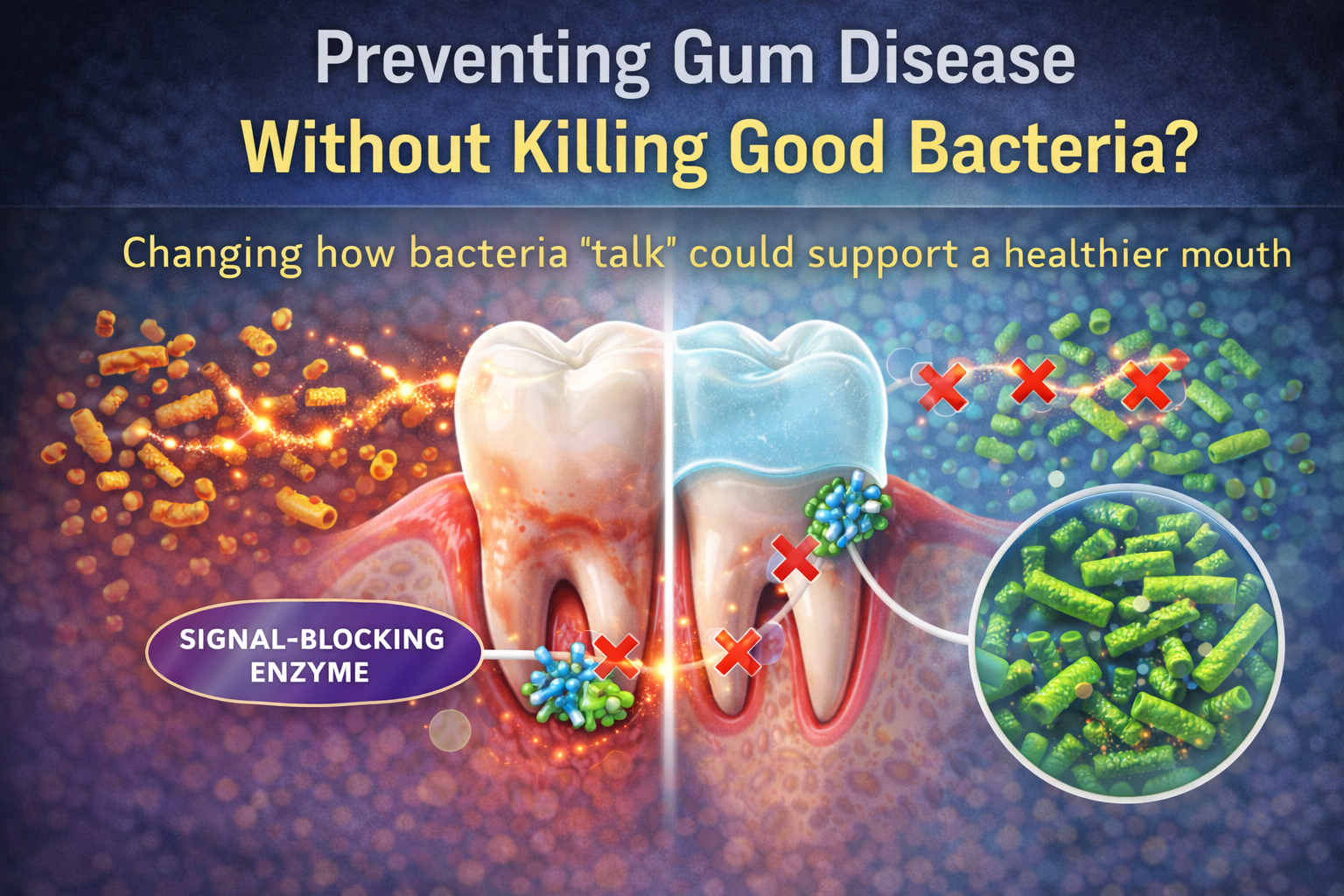
Researchers studying oral bacteria found that this shift may be influenced by quorum sensing, a process bacteria use to communicate through chemical signals. In the mouth, these microbial “conversations” help bacteria coordinate behavior as a group. That means plaque is not just growing—it is organizing.
A New Approach to Preventing Periodontal Disease
Instead of using treatments that broadly kill bacteria, the researchers explored what happens when those chemical signals are disrupted. Their findings suggest that blocking certain bacterial signals can shift plaque communities toward health-associated bacteria and away from species linked to disease.
That is important because it points to a more precise way to support the oral microbiome. Rather than treating all bacteria as the enemy, future therapies may be able to encourage a healthier bacterial balance above and below the gumline.
In simple terms, this approach aims to make dental plaque less dangerous without completely clearing out the good bacteria that help protect the mouth.
Why This Matters for Gum Health
This matters because current treatments for gum disease often focus on reducing bacteria in a broad way. While that can be necessary in many cases, it can also disrupt the natural microbial balance of the mouth. A microbiome-based approach could potentially help prevent disease while preserving the beneficial bacteria that support healthy gums.
It also fits with what dentistry is learning more broadly: oral health is often about balance, not just elimination. The goal is not to sterilize the mouth. The goal is to prevent harmful bacterial communities from taking over.
What This Could Mean for Everyday Dentistry
If this research leads to practical treatments, future gum disease therapies might look very different. Instead of relying only on antiseptics or antibiotics, dentists may one day use targeted compounds or enzymes that interfere with bacterial communication and keep plaque in a healthier stage.
That could be especially useful for patients who are prone to recurring gum inflammation, plaque buildup, or early periodontal changes. It may also offer a new way to manage disease risk without pushing harder on the cycle of bacterial resistance.
The Bigger Takeaway
The most interesting part of this research is the bigger idea behind it: bacteria do not always need to be killed to be controlled. Sometimes the better strategy may be to influence their behavior.
For oral health, that could open the door to a new generation of gum disease prevention—one focused on maintaining a healthy microbiome rather than destroying everything in sight. If that happens, the future of dentistry may become less about fighting all bacteria and more about guiding the mouth back toward balance.