Most people think of cavity-causing bacteria as a threat to teeth. But new research (Hyunji Park, Jiwon Cheon, Hyojung Kim, Jihye kim, Jihyun Kim, Jeong-Yong Shin, Hyojin Kim, Gaeun Ryu, In Young Chung, Ji Hun Kim, Doeun Kim, Zhidong Zhang, Hao Wu, Katharina R. Beck, Fredrik Bäckhed, Han-Joon Kim, Yunjong Lee, Ara Koh. Gut microbial production of imidazole propionate drives Parkinson’s pathologies. Nature Communications, 2025; 16 (1)) suggests that some harmful mouth bacteria may have effects that go far beyond the mouth. Scientists found evidence that a common oral bacterium linked to tooth decay may also influence the gut and, in turn, contribute to brain changes associated with Parkinson’s disease.
That is a major reminder that oral health and overall health are deeply connected. The mouth is not isolated from the rest of the body. Bacteria that begin in the mouth may travel, interact with the gut, and potentially affect other organs in ways researchers are still working to understand.
From the Mouth to the Gut to the Brain
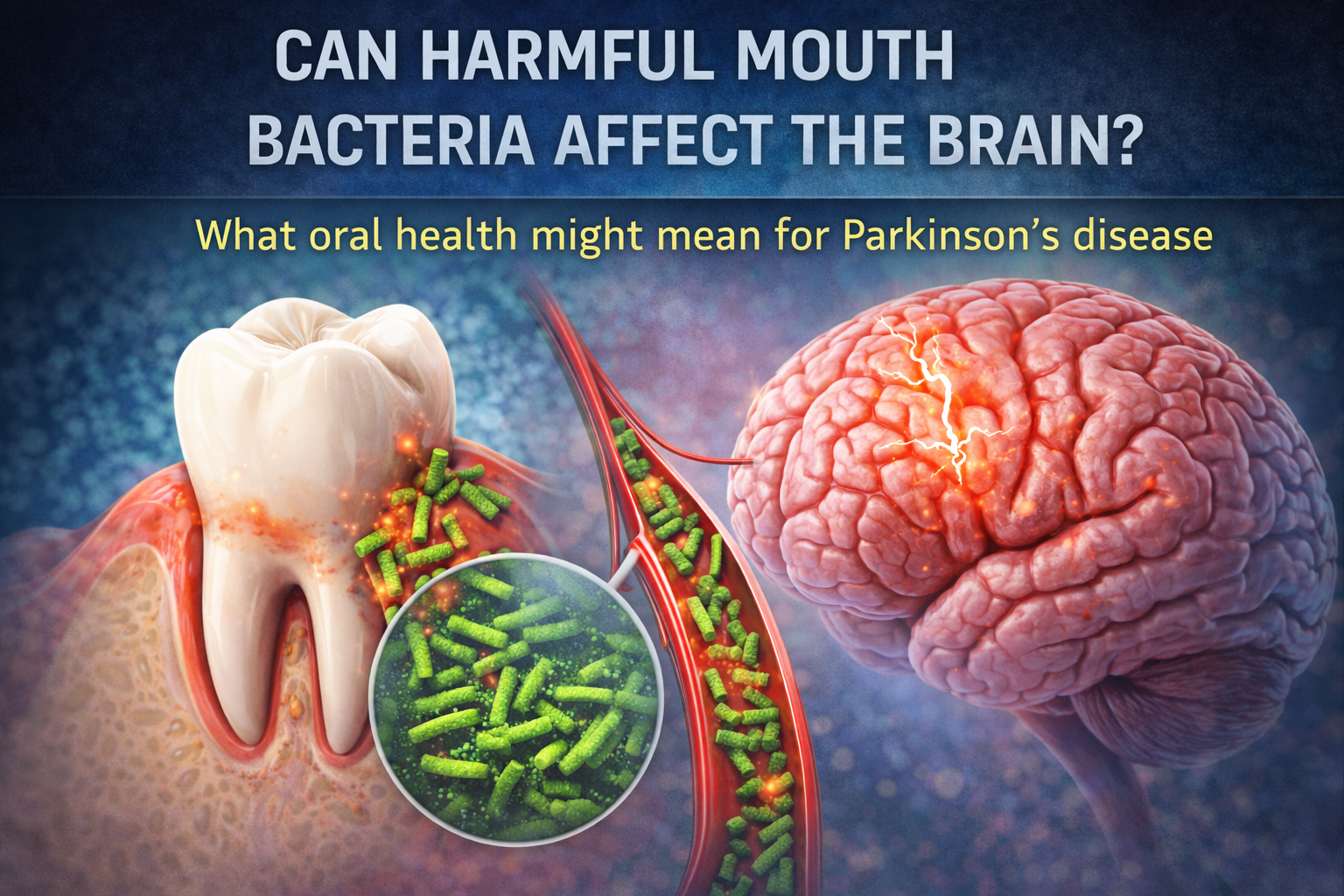
The research focused on Streptococcus mutans, a bacterium best known for causing dental cavities. Investigators found higher levels of this microbe in the gut microbiomes of people with Parkinson’s disease. They also identified bacterial byproducts that appeared in the gut and bloodstream and may play a role in damaging dopamine-producing neurons, the same type of brain cells affected in Parkinson’s.
In animal studies, this process was linked to inflammation, motor problems, and brain changes associated with the disease. The findings suggest that what starts as an oral health issue may, under certain conditions, become part of a much larger bodywide process.
Why This Matters in Dentistry
From a dental perspective, this research reinforces the importance of controlling the bacterial burden in the mouth. Dentists have long warned that untreated decay, poor oral hygiene, and chronic infection can affect more than just teeth and gums. This study adds to growing evidence that the oral microbiome may influence the rest of the body in surprising ways.
That matters for everyday dental care. Brushing, flossing, regular cleanings, and treating cavities early are not just cosmetic habits. They may help reduce the spread of harmful bacteria and lower the inflammatory stress the body has to manage.
A Wisdom Teeth Angle
This is also relevant when thinking about wisdom teeth. Partially erupted or difficult-to-clean wisdom teeth can create spaces where bacteria collect more easily. Food debris, plaque, and inflammation can build up around the gum tissue in those areas, making them a persistent bacterial hotspot. Not every wisdom tooth causes problems, but when wisdom teeth are hard to clean, repeatedly inflamed, or partly trapped under the gums, they may contribute to a less healthy oral environment.
While this research was not specifically about wisdom teeth, it supports a broader dental message: areas of the mouth that trap bacteria should not be ignored. Whether the issue is untreated cavities, inflamed gums, or troublesome wisdom teeth, chronic bacterial buildup may matter more than people think.
The Bigger Oral Health Message
The most important takeaway is not that mouth bacteria directly cause Parkinson’s in a simple way. This is emerging research, and much more work is needed before drawing firm conclusions about risk in humans. But the study does point to a biologically plausible pathway linking oral bacteria, gut health, and brain health.
For patients, that means oral hygiene deserves to be taken seriously. Preventing tooth decay, treating infections early, and staying on top of routine dental care may be part of protecting long-term health in ways we are only beginning to understand.
Final Thoughts
This research adds a new layer to the importance of dental care. A bacterium best known for causing cavities may also influence the gut and the brain, raising fresh questions about how oral bacteria contribute to disease beyond the mouth.
For dentists, it is another reason to emphasize prevention. For patients, it is a reminder that oral health is not just about avoiding fillings or saving wisdom teeth from infection. It may also be part of protecting the health of the entire body, including the brain.