A new keratin toothpaste may change how we think about enamel repair and cavity prevention. Researchers (Sara Gamea, Elham Radvar, Dimitra Athanasiadou, Ryan Lee Chan, Giacomo De Sero, Ecaterina Ware, Sunie Kundi, Avir Patel, Shwan Horamee, Shuaib Hadadi, Mads Carlsen, Leanne Allison, Roland Fleck, Ka Lung Andrew Chan, Avijit Banerjee, Nicola Pugno, Marianne Liebi, Paul T Sharpe, Karina Carneiro, Sherif Elsharkawy. Biomimetic Mineralization of Keratin Scaffolds for Enamel Regeneration. Advanced Healthcare Materials, 2025) found that keratin—the protein found in hair, skin, and wool—can help form a mineralized layer on teeth that acts like natural enamel. That could make it a promising new option for protecting teeth from erosion and early decay.
Why This Matters for Tooth Enamel
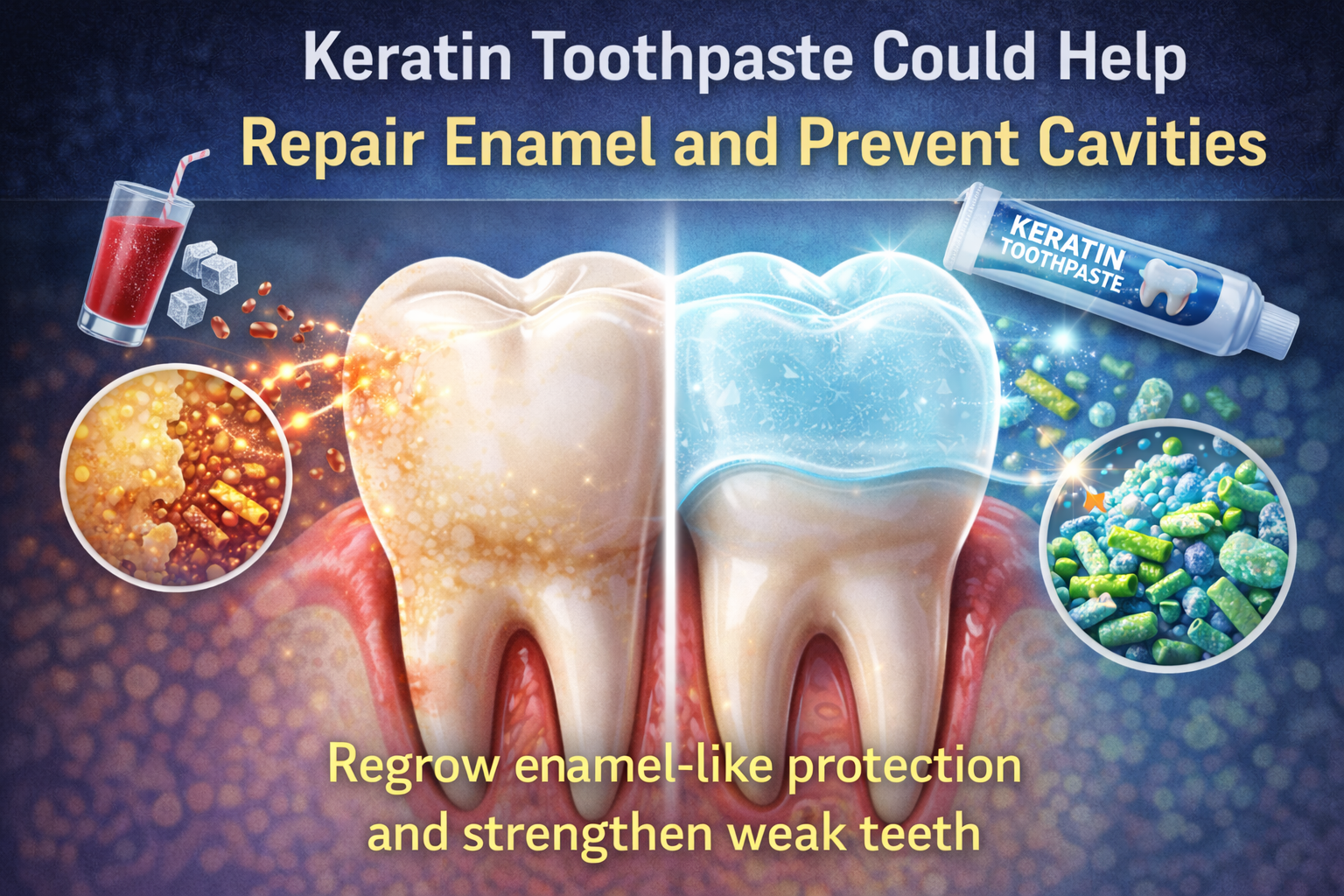
Unlike bone, tooth enamel does not grow back once it is lost. Acidic drinks, sugar, and everyday wear can slowly weaken enamel, leading to tooth sensitivity, discoloration, and a higher risk of cavities. Traditional fluoride toothpaste helps strengthen enamel, but this new keratin-based approach may go a step further by helping rebuild a protective enamel-like surface.
How Keratin Toothpaste Works
When keratin is applied to teeth, it can interact with minerals in saliva and form a crystal-like coating. This layer closely mimics the structure and function of enamel, helping protect the tooth surface and slow early decay. Researchers also found that it may block the tiny channels that cause sensitivity, offering another benefit for patients with worn enamel.
A New Direction in Enamel Repair
This research is exciting because it points toward a more regenerative approach to dentistry. Instead of only treating cavities after damage becomes severe, keratin toothpaste could help strengthen teeth earlier and support enamel restoration before a filling is needed.
A More Natural and Sustainable Dental Material
Keratin can be sourced from biological materials like hair and wool, making it a more sustainable option than some traditional dental materials. That gives this new toothpaste for enamel repair both a dental and environmental appeal.
Final Thoughts
It is still early, but keratin toothpaste could become an important new tool for repairing enamel, reducing sensitivity, and helping prevent cavities. If future studies confirm these results, the future of toothpaste may be about more than cleaning teeth—it may be about helping restore them.